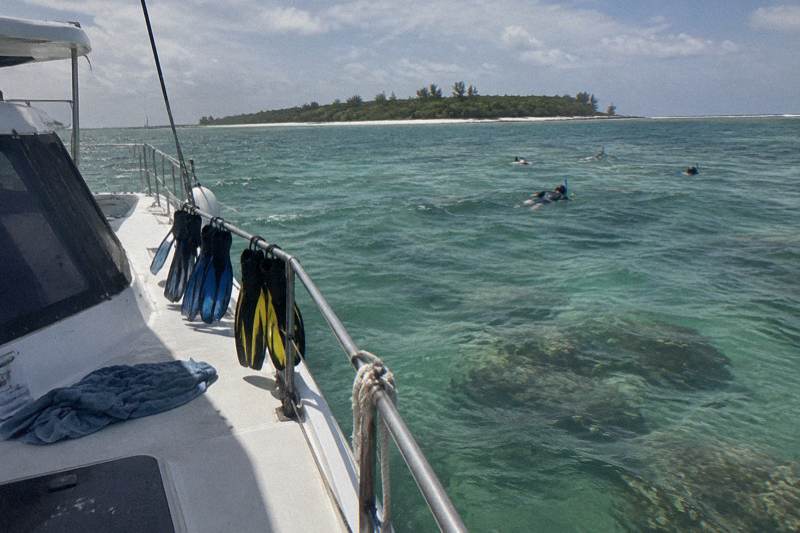
Are There Sharks On A Lady Musgrave Island Snorkel Cruise?
Queensland Parks and Wildlife says plainly that sharks are present at all times of the year in open ocean, and Lady Musgrave Island sits 59 km east-north-east of Seventeen Seventy in that ocean. The honest answer to the shark question is about context, not reassurance slogans, and it starts with knowing which water you will actually be floating in.
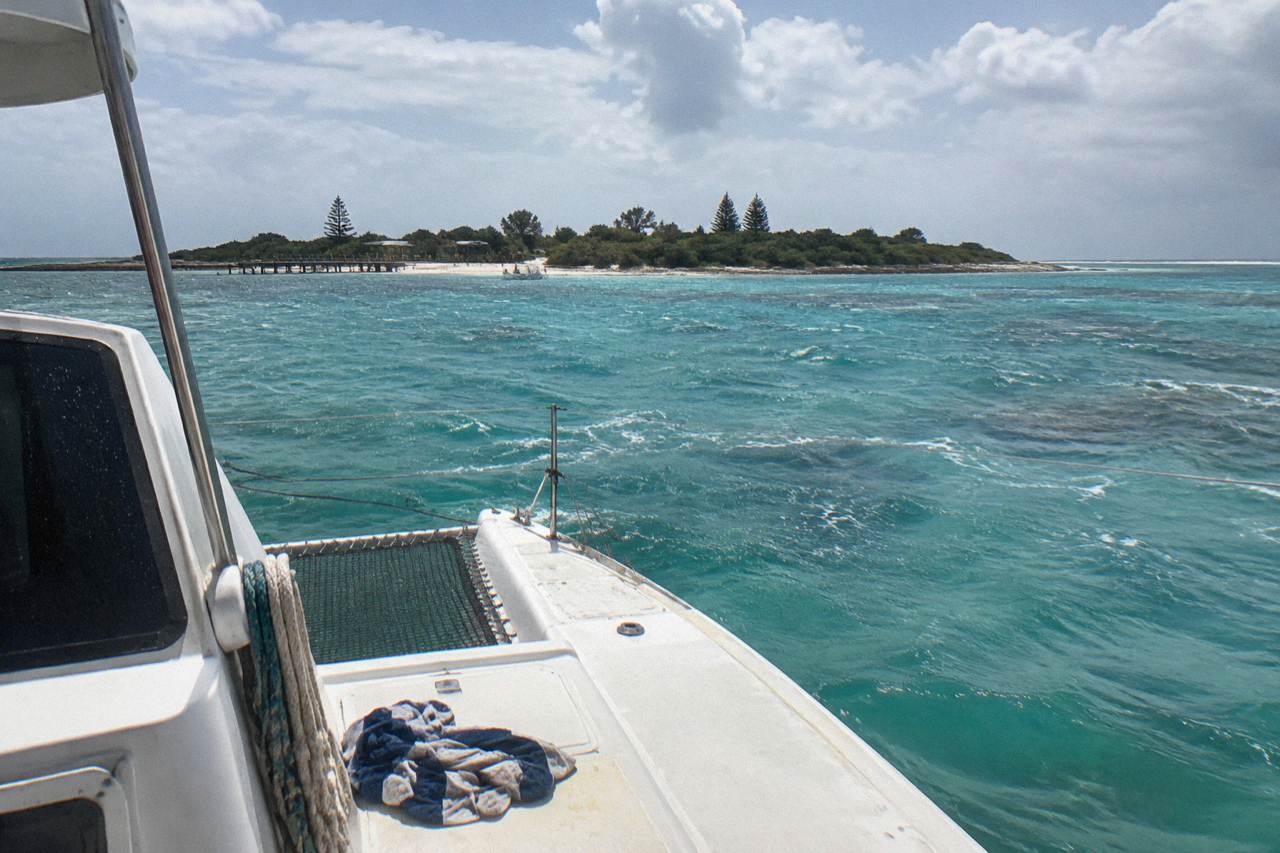
Yes, sharks live in the waters around Lady Musgrave Island all year, and the Queensland Parks and Wildlife Service's SharkSmart advice for the island states this plainly. That applies to the open ocean generally, though, not to any single snorkel cruise, so no operator departing from 1770 or Bundaberg can promise which animals you will actually see on the day you go out.
That single sentence from the Queensland Parks Lady Musgrave page is the most reliable thing anyone can tell you about sharks and this trip. It comes from the same agency that manages Capricornia Cays National Park, which includes Lady Musgrave Island, and it reflects the way the Great Barrier Reef works everywhere: a healthy reef system has sharks in it, always, the same way a forest has birds in it. What varies is not whether sharks exist in the water but where you are relative to them, and that is the part a day cruise actually controls.
Lady Musgrave Island sits 59 km east-north-east of Seventeen Seventy, according to Queensland Parks, and around 60 km offshore by the Tourism and Events Queensland measure. The crossings from the mainland, whether from the 1770 marina or from Bundaberg Port Marina at Burnett Heads, spend their time in exactly the kind of open ocean water the SharkSmart advice describes. That is worth knowing before you board, not because it is alarming, but because it frames what the crew briefings are for.
Wildlife sightings are never promised on these cruises. The 1770 Reef Eco Tours Lady Musgrave Island snorkelling day cruise is rated 4.3 across 257 reviews, and the Dive Spear and Sport snorkelling day trip from 1770 is rated 4.7 across 40 reviews. Those numbers describe trips taken, not animals visitors may see.
If the question behind your question is whether to book at all, the three trips most readers compare are below: the small group speedboat trip from 1770, the big catamaran cruise with glass bottom boat, and the full day LARC amphibious tour for the day you stay dry. Prices are from, per person, in the currency shown.
Where Will You Actually Be Snorkelling?
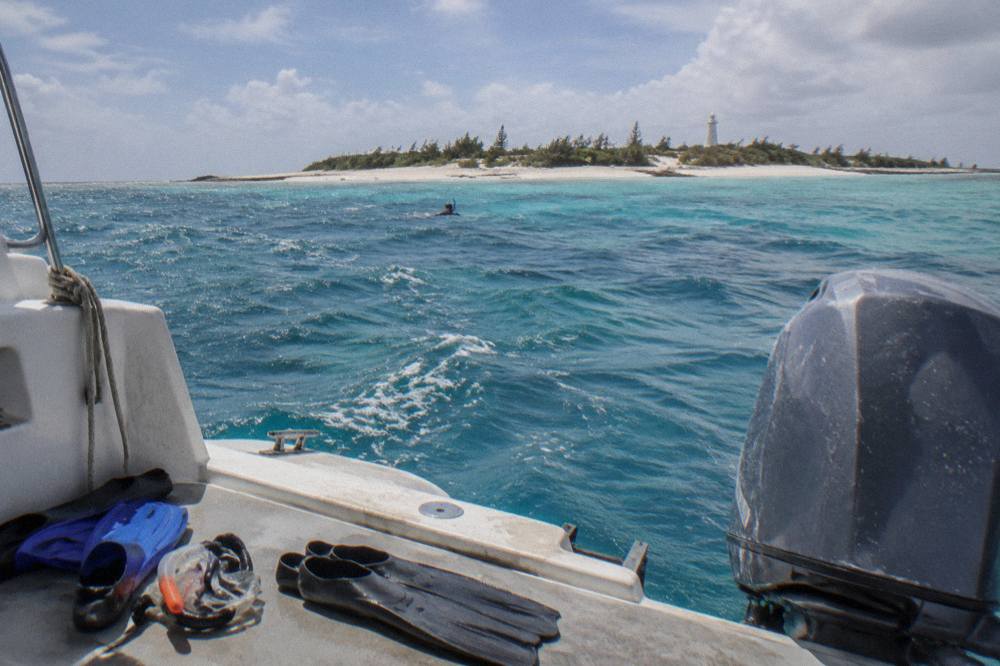
Lady Musgrave day cruises put snorkellers in the water on and around the island's own reef, not the open water you cross to get there. After a crossing of roughly 90 minutes each way on the 1770 Reef Eco Tours departure, which states that time on its page, you will be snorkelling at a coral cay, one of eight in Capricornia Cays National Park, built entirely by corals rather than being a rocky continental island.
The distinction matters for the shark question because the Queensland Parks SharkSmart line is about open ocean. The crossing is open ocean. The snorkelling happens at the cay, inside the reef system that gave the southern Great Barrier Reef its character. Queensland Parks describes the Capricornia Cays as completely built by corals, part of the Great Barrier Reef World Heritage Area, and Lady Musgrave is the cay with a lagoon beside it. Snorkelling at the island means floating over that reef structure with the group your crew assembles, not drifting alone in mid ocean.
Marine Park zoning applies across the Great Barrier Reef. The Reef Authority's guidance on the Marine National Park (Green) Zone describes it as a no-take area where extractive activities like fishing or collecting are not allowed without a permit, while anyone may enter to boat, swim, snorkel and sail. About 33 per cent of the whole Marine Park carries that zoning. A no-take area is not a shark free area, to be clear.
Around the island itself the Reef Authority's Lady Musgrave site management rules add a go slow area extending from mean high water out to 500 metres around the island or the edge of the outer drying reef, whichever is less, plus designated cay access and vessel loading areas. Vessels behave differently inside those lines than they do on the crossing. For a snorkeller, the practical takeaway is that the water you float in is a managed, speed limited, activity defined patch of reef with crew nearby, and that is a different proposition from the open ocean the boat crossed to get there.
The Reef Authority also sets an environmental management charge, A$8.50 for a full day passenger, collected by the operator per passenger. That single fact is all that needs saying about it here.
Which Creatures Share The Water At Lady Musgrave?
The Capricorn and Bunker groups of islands are one of the world's major breeding areas for green and loggerhead turtles, with turtles nesting on many beaches on most nights from December to February. Sharks are present year round in open ocean, per Queensland Parks. Check the booking page for what each cruise says about animal sightings.
Turtles are the clearest case study in why wildlife claims need sourcing. The Queensland Government's turtle biology page names the Capricorn/Bunker Groups as a major breeding area, but it names North West, Hoskyn and Wreck Islands as the most important green turtle nesting sites, and Lady Musgrave is not among the named rookeries. Nearby mainland beaches in Eurimbula National Park do host loggerhead, flatback and green turtles nesting from mid-November to February, with hatchlings leaving nests from mid-January to late March. Those are facts about places and seasons, not about a boat ticket.
Sharks fit the same discipline. The Queensland Parks Lady Musgrave page says sharks are present at all times of the year in open ocean, and that is the whole of the official statement. There is no official frequency claim, no species list for the lagoon, no encounter statistic, and inventing any of those would be worse than saying nothing. What the SharkSmart framing tells you, usefully, is that sharks are a normal, permanent feature of the ecosystem you are choosing to visit, not an anomaly that appears some seasons and not others.
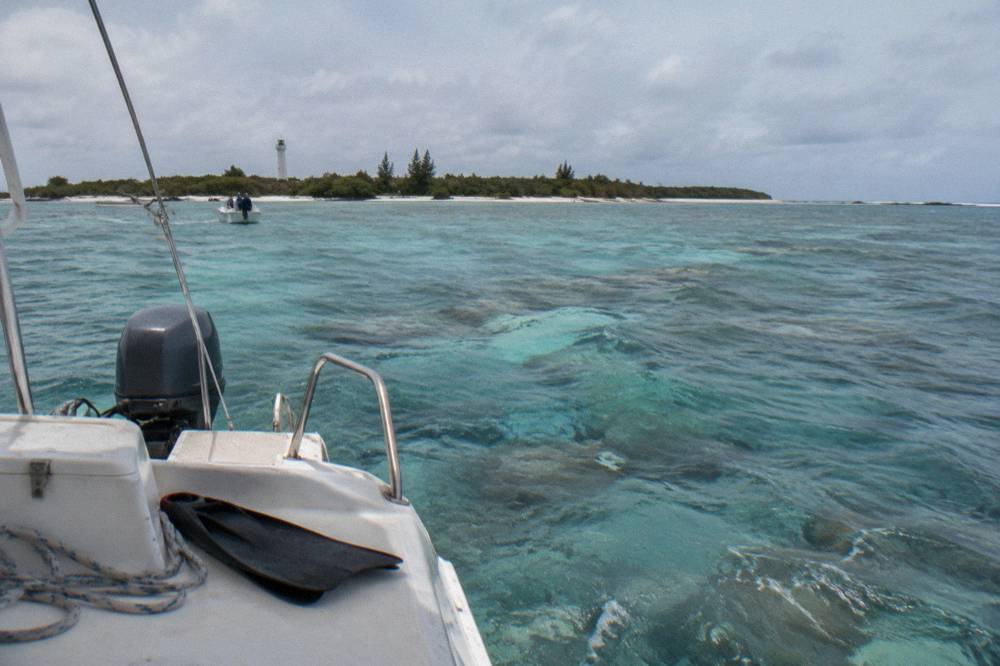
The Queensland Government's general marine safety advice adds one more layer worth having: marine stingers are present in tropical Queensland waters all year round, with higher risk during the marine stinger season from November to May, and the advice includes considering a full-body lycra suit. That page does not single out Agnes Water, 1770 or Lady Musgrave. There is a separate post on this site covering the stinger question in full, at the stinger season article for Lady Musgrave snorkellers, if that side of the safety picture is what is holding up your booking.
Put together, the honest summary is that the water at Lady Musgrave is a functioning reef ecosystem with large animals in it, permanently, and the role of a day cruise is to put you in the right part of it with the right gear and the right briefing. If a shark is a reason to cancel a reef trip, the Great Barrier Reef is the wrong destination entirely. If a shark is a reason to want a competent crew, good equipment and a small group, then it is simply one of the criteria for choosing which cruise to book.
How Do You Snorkel Safely On A Day Cruise?
The practical rules are the ones your crew gives you: snorkel in the group the crew assembles, follow instructions on where to enter and exit the water, use the equipment provided, and stay within sight of the crew. The Dive Spear and Sport day trip lists a guided snorkelling tour with all equipment including full length wetsuits, and a group capped at 10.
Group discipline is not bureaucratic padding, it is the actual safety system on a reef. A dispersed scatter of solo snorkellers is harder for crew to watch than a coherent group, and most of the standard snorkel safety advice, stay with your buddy, keep the boat or float in view, signal rather than swim away if you feel unsure, amounts to keeping each person countable. The small group format of the speedboat trip from 1770 makes that easier by design: with a maximum of 10 guests and a guided tour listed among the inclusions, the ratio of eyes to snorkellers is favourable before anything else happens.
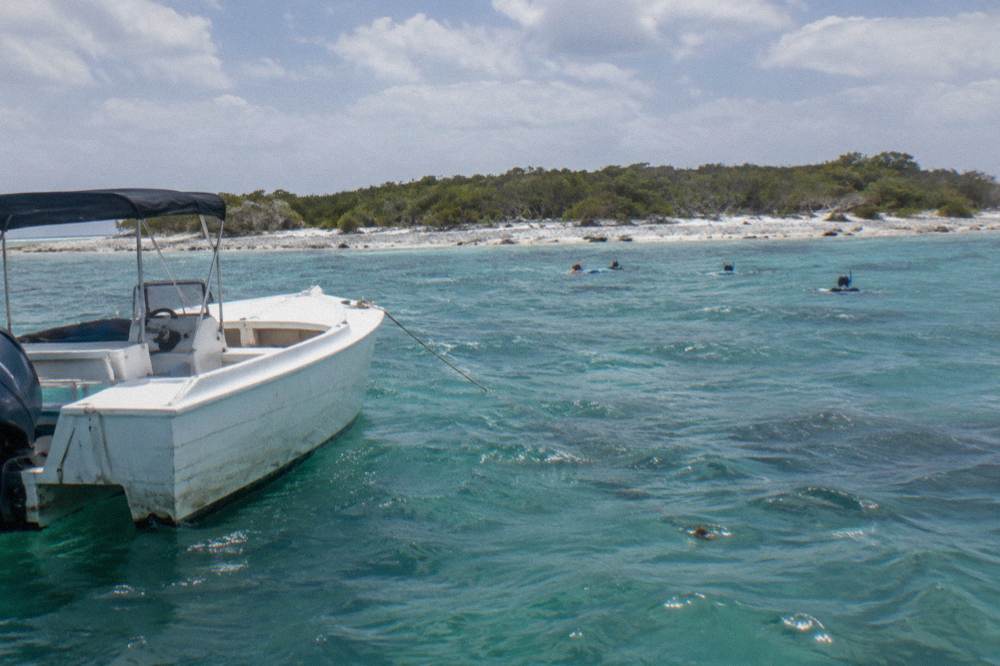
The bigger catamaran trips run a different but equally deliberate structure. The 1770 Reef Eco Tours Lady Musgrave Island snorkelling day cruise lists a glass bottom boat tour and a guided island walk alongside the snorkelling equipment, over nine hours from the 1770 marina, from $222 per person, rated 4.3 across 257 reviews. The Bundaberg departure, the Lady Musgrave Experience day cruise, is a 10 hour day from Bundaberg Port Marina at Burnett Heads, from $237 per person, rated 4.8 across 368 reviews, with premium Mares masks, snorkels and fins listed and a glass bottom boat tour included. Different vessels, same principle: the crew sets where the water entry happens and manages the group around it.
One point of trip arithmetic is worth flagging for anyone comparing the two Dive Spear and Sport scuba trips, since this site carries both an eight-hour outer reef trip from $315.37 and a nine-hour southern reef trip from $298. Check both pages before booking, as details such as durations and group sizes differ. Scuba on these trips is for certified divers only. The trip that answers the shark question is Dive Spear and Sport's nine hour Southern Great Barrier Reef snorkelling day trip, from $216 per person.
For the day a nervous snorkeller wants the reef without the water, the 1770 LARC! Tours full-day Paradise Tour with Bustard Head and sandboarding keeps everything amphibious: seven hours from $118 per person, rated 5.0 across 615 reviews, with a lighthouse visit, sandboarding and lunch included.
Should Fear Of Sharks Stop You Booking?
No, and the reasons are concrete rather than comforting. Sharks are a permanent, year round presence in the open ocean the boat crosses, in a reef ecosystem that Queensland Parks and the Reef Authority manage actively, on trips with guided snorkelling, supplied equipment, group control and free cancellation stated on all eight tours this site covers, 24 hours before departure on seven and 14 days on the Bundaberg cruise. The decision that matters is picking the trip whose format suits your confidence level in the water.
Start with the format question, because it is the one you control. A traveller who swims well and wants intimacy with the reef suits the 10 person speedboat trip, where the wetsuit is included and the day is built around two snorkelling sites. A traveller who wants options on the water, the glass bottom boat as a dry alternative, a buffet lunch and a guided island walk, suits a catamaran day with its wider activity mix. A traveller whose shark concern is really a deep water concern may be happiest on the glass bottom boat portions of a big cruise, where the reef comes to you through the hull.
The cancellation terms also reduce the stakes of booking early. Free cancellation up to 24 hours before the start time is stated on seven of the eight cruises covered on 1770 Cruises, with the Bundaberg cruise requiring notice up to 14 days in advance for a full refund. Weather moves trips too, and there is a full post on that at what happens when weather cancels a Lady Musgrave cruise. The practical sequence is: book the format that matches your water confidence, wear what the crew supplies, listen to the briefing, and stay with the group.
There is a packing angle as well, and it interacts with the stinger advice above: if you are considering a full-body lycra suit or want your own mask rather than a shared one, the decisions belong in the planning stage. The site's guide on what to bring on a Lady Musgrave day cruise covers it in detail, including the items that make a nine or ten hour day on the water comfortable regardless of what swims beneath it.
What Do The Snorkel Cruise Options From 1770 Compare Like?
Three snorkel trips dominate the comparison from this coast, two of them to Lady Musgrave Island: the Dive Spear and Sport speedboat trip to southern Great Barrier Reef sites from $216 per person with a group cap of 10, the 1770 Reef Eco Tours catamaran day from $222 with a glass bottom boat and guided island walk, and the Bundaberg departure from $237 running 10 hours. All three include lunch and snorkelling gear, and all three state hotel pickup is not included.
The three from-prices sit within $21 of each other, so format, not fare, separates the tours. Here is how the tours line up:
| Trip | From (per person) | Duration | Group max | Glass bottom boat | Guided island walk | Departs |
|---|---|---|---|---|---|---|
| Dive Spear and Sport snorkelling day trip | $216 | 9 hours | 10 | Not stated | Not stated | 1770 marina |
| 1770 Reef Eco Tours Lady Musgrave cruise | $222 | 9 hours | Not stated | listed | listed | 1770 marina |
| Lady Musgrave Experience day cruise | $237 | 10 hours | Not stated | listed | listed | Bundaberg Port Marina, Burnett Heads |
Read the table as a format choice. The speedboat row buys you a small group and a wetsuit, and trades away the glass bottom boat. The two catamaran rows buy structure and alternatives, with the 1770 Reef departure keeping you at the closer marina and the Bundaberg departure running the longest day. Which side of that trade suits you depends on the shark question as much as anything: a snorkeller who wants people within arm's reach all day is choosing a different row from one who wants clear water and a tight group.
The Bundaberg cruise needs one repeated caution because the departure port is easy to confuse: it departs Bundaberg Port Marina at Burnett Heads, not the 1770 marina. Bundaberg is 122.2 km or about 1 hr 25 min from Agnes Water by road, per the regional tourism body's driving distances. Booking the wrong departure point for a 10 hour day is an expensive morning.
Does The Time Of Year Change The Shark Picture?
No. Seasonal warnings in this region cover turtles, stingers and cyclones rather than sharks, and Queensland Parks states that sharks are present in the open ocean around Lady Musgrave at all times of the year, so no month carries an officially higher or lower shark risk. Pick your travel dates for turtles, stingers or weather if you like, but choosing a month to avoid sharks has no official basis.
The seasonal facts that are real are still useful for planning. The driest months at Seventeen Seventy by Bureau of Meteorology averages are June through September, with mean rainfall from 34.9 mm to 58.1 mm, against a wettest stretch from December to March. Mean daily maxima run from 21.5 °C in July to 29.7 °C in January. If cooler, drier days appeal, the southern winter months fit, and the site's guide on the best time for a Lady Musgrave cruise works through the full calendar.
None of that touches sharks. An ecosystem does not switch its apex residents off for the winter, and the QPWS wording is deliberately season free. If a booking page or a forum post tells you sharks are a summer thing or a winter thing around Lady Musgrave, no official source backs that claim, so treat it with caution.
What the seasons do change is what you pack and what you wear in the water. The stinger advice from November to May, the general Queensland Government line about full-body lycra suits in tropical waters, and the included full length wetsuit on the Dive Spear and Sport trip all point the same direction: more coverage in the warmer months, and a crew that will tell you on the day what the conditions call for. That, plus the shark facts above, is the complete honest picture. Here are the two cruises again for a final look.
Common Questions About Sharks On A Lady Musgrave Snorkel Cruise
Are There Sharks On A Lady Musgrave Island Snorkel Cruise?
Sharks are present in the open ocean around Lady Musgrave Island at all times of the year, according to Queensland Parks and Wildlife Service SharkSmart advice. No official source states a frequency, a species list or an encounter likelihood for the snorkelling sites, and no cruise can promise or rule out a sighting on any given day.
Do The Lady Musgrave Cruises From 1770 Go Into Open Ocean?
Yes. The crossing does. Lady Musgrave Island sits 59 km east-north-east of Seventeen Seventy, and the 1770 Reef Eco Tours page states a crossing of about 90 minutes each way. The snorkelling itself takes place at the island's reef system, a coral cay within Capricornia Cays National Park, under crew direction.
Is Snorkelling At Lady Musgrave Guided?
On the trips covered here, yes. The Dive Spear and Sport snorkelling day trip from 1770 lists a guided snorkelling tour with all equipment including a full length wetsuit, with a group maximum of 10. The 1770 Reef Eco Tours and Lady Musgrave Experience cruises supply snorkelling equipment and run glass bottom boat tours alongside the water activities.
Can I Cancel If I Get Nervous Before The Trip?
Free cancellation up to 24 hours before the start time is stated on seven of the eight cruises covered on this site, and the Bundaberg departure allows cancellation up to 14 days in advance for a full refund. Check with the operator for the specific trip you book, as terms are per product.
Is There A Season When There Are Fewer Sharks?
No official source gives one. Queensland Parks says sharks are present in open ocean at all times of the year, with no seasonal qualification. The seasonal advisories that do exist concern stingers, higher risk November to May, and cyclones, 1 November to 30 April, not sharks.