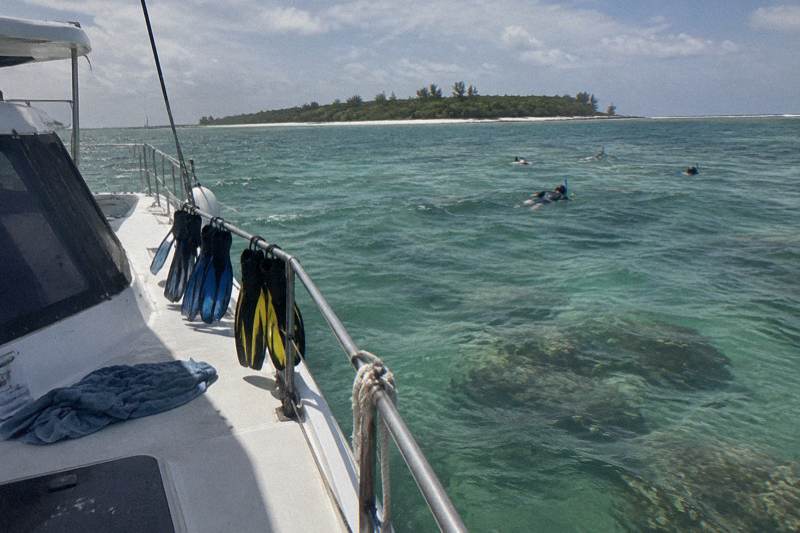
Are There Stingers On A Lady Musgrave Island Snorkelling Cruise?
Stingers worry a lot of first-time snorkellers, and the honest answer is that no official source makes a call either way for Lady Musgrave Island itself. Here is the Queensland Government advice that does exist, what each cruise from the Town of 1770 and Bundaberg actually provides, and how to think about the risk.
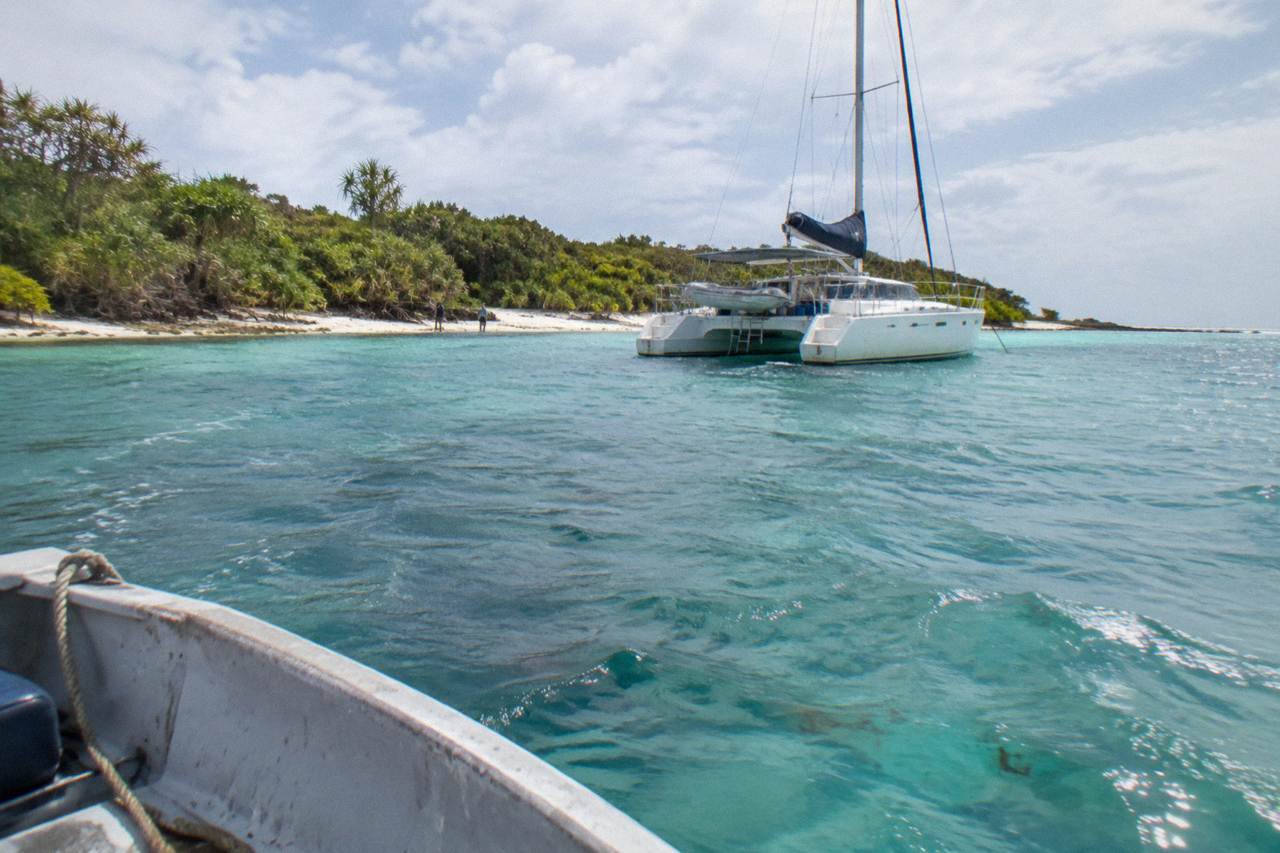
No official source answers that question for Lady Musgrave Island specifically, and any page claiming a definite yes or no is going beyond the record. The Queensland Government states that marine stingers are present in tropical Queensland waters all year round, with higher risk from November to May, and that advice page does not address Agnes Water, the Town of 1770 or Lady Musgrave at all. What follows is that official advice, plus what the cruise operators provide.
That may sound like a dodge, but it is the most useful answer available. The Queensland Government's dangerous marine stingers advice covers tropical Queensland as a whole: stingers are present year round, the risk climbs during the marine stinger season from November to May, swimmers should use patrolled beaches between the flags, obey signage, and consider wearing a full-body lycra suit. That is the sum of what an official source says. Whether box jellyfish or irukandji are present at the Lady Musgrave lagoon on any given day is a conditions question, and no official source makes that call.
So the practical question shifts from "are they there" to "what do I do about the possibility". That question has solid answers. The cruise operators running out of the Town of 1770 marina and Bundaberg Port Marina differ in what they hand you on the day, the Queensland climate record tells you which months carry the official higher-risk label, and the same gear that addresses stinger risk also addresses the other thing people worry about at this latitude: the mild water of the southern winter. If a reader is deciding whether to book at all, the post on whether a Lady Musgrave day cruise is worth it covers the broader value question.
This article walks through the official advice, the season, the gear each cruise provides, and the other marine-safety questions that come up alongside stingers, including the shark question, which Queensland Parks answers far more directly.
What Is The Official Stinger Advice For Queensland Waters?
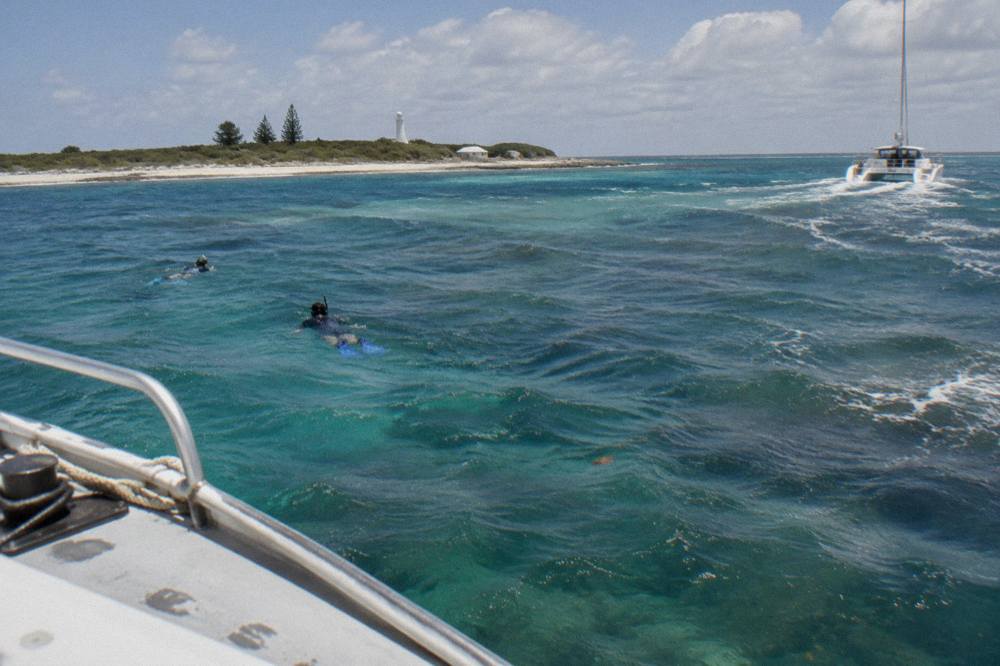
The Queensland Government says marine stingers are present in tropical Queensland waters all year round, that risk is higher during the marine stinger season from November to May, and that swimmers should swim at patrolled beaches between the flags, obey signs, and consider wearing a full-body lycra suit. The same page says nothing about Agnes Water, the Town of 1770 or Lady Musgrave Island specifically. That last point matters: a travel page promising "no stingers at Lady Musgrave" or warning "stingers everywhere in Queensland" is paraphrasing an official page that deliberately makes neither claim.
Two parts of the advice travel awkwardly to a reef cruise. Patrolled beaches do not exist at a coral cay 59km east-north-east of Seventeen Seventy, as Queensland Parks positions the camping area, and a lycra suit or wetsuit is something the operator either provides or it does not. Neither gap means the advice is useless. It frames the decision: outside November to May the official risk language is simply "present year round", and inside that November to May season the recommendation to cover skin becomes more pointed.
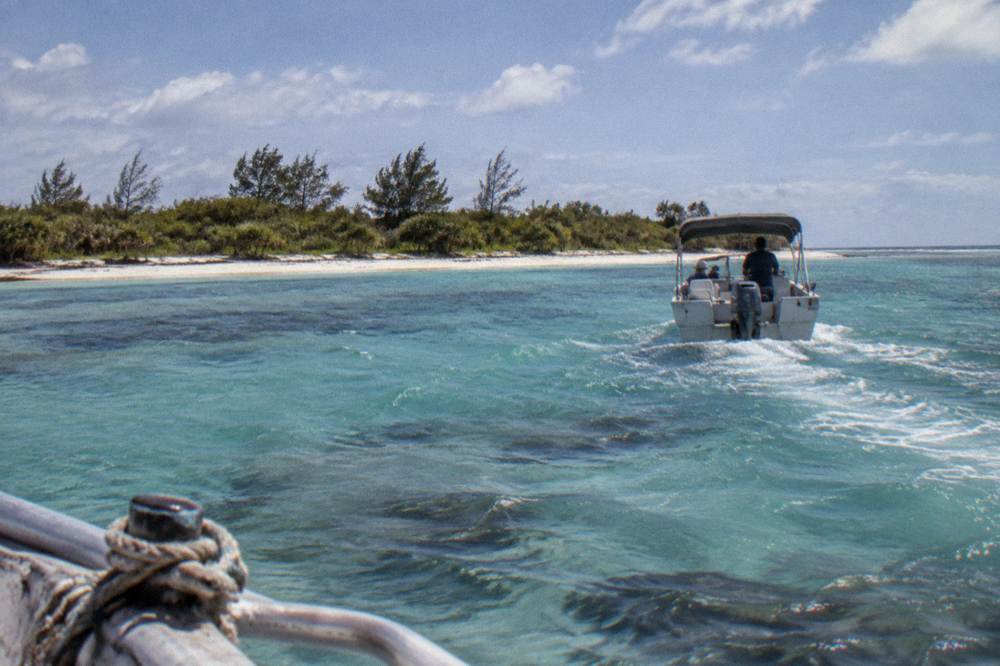
It is also worth separating stingers from the other marine life questions people bundle together. Sharks, for instance, have an explicit official statement for this reef: Queensland Parks' Lady Musgrave Island page says sharks are present at all times of the year in open ocean, paired with SharkSmart advice. The post on sharks on a Lady Musgrave snorkel cruise covers that in full. Stingers get a regional statement, not a site-specific one, and honest copy should keep that distinction visible.
| Official advice point | What the Queensland Government page says | How it applies to a cruise |
|---|---|---|
| Presence | Marine stingers present in tropical Queensland waters all year round | No site-specific claim for 1770 or Lady Musgrave |
| Season | Risk higher during marine stinger season, November to May | Months to weight a suit decision more heavily |
| Where to swim | Patrolled beaches, between the flags | No patrolled beach at the cay; ask the operator how snorkelling is supervised |
| Signs | Obey all signage | Follow crew instructions and any on-board brief |
| Protection | Consider a full-body lycra suit | Ask the operator what suit is provided or rentable |
Do The Lady Musgrave Cruises From 1770 Provide Stinger Suits?
Gear differs by operator, and only one of the reef cruises includes a full-length wetsuit in the ticket: the Dive Spear and Sport snorkelling day trip from 1770, from $216 per person. The 1770 Reef Eco Tours cruise includes snorkelling equipment but lists wetsuits under exclusions, and the Lady Musgrave Experience cruise from Bundaberg lists wetsuits as available to rent. None of the operators states that a suit is compulsory, and none promises stinger protection.
Starting with the departure closest to hand, the 1770 Reef Eco Tours Lady Musgrave Island snorkelling day cruise runs 9 hours from the 1770 marina, from $222 per person, rated 4.3 across 257 reviews. The inclusions run to transfers to the island on a power catamaran, a glass-bottom boat tour, a guided island walk, snorkelling equipment, lunch, morning and afternoon tea, tea, coffee and chilled water. Wetsuits sit in the exclusions column. If a full-body suit is what makes a reader comfortable in the water between November and May, that is a question to put to the operator before booking rather than a line to assume either way.
The speedboat alternative from the same marina makes a different call. The Dive Spear and Sport snorkelling day trip from 1770, 9 hours, from $216 per person, rated 4.7 across 40 reviews, caps the group at 10 and includes all snorkelling equipment together with a full length wetsuit, plus lunch and snacks, across two different snorkelling sites. For a reader whose stinger worry is the single thing standing between them and the water, an included wetsuit is a concrete difference, and it comes on the smaller boat.
From Bundaberg Port Marina at Burnett Heads, south of Agnes Water (Visit Agnes 1770 puts Bundaberg 122.2 km and 1 hr 25 min away), the Lady Musgrave Experience day cruise runs 10 hours, from $237 per person, rated 4.8 across 368 reviews. It includes premium mask, snorkel and fins, a glass-bottom boat tour, a guided island walk, a gourmet buffet lunch and warm freshwater showers, and lists a wet suit as available to rent alongside purchasable dives. The shower line is a comfort detail, not a safety one, but it tells you the operator expects people to spend real time in the water.
| Cruise | Departs | Wetsuit or suit position | Snorkel gear |
|---|---|---|---|
| 1770 Reef Eco Tours Lady Musgrave snorkelling day cruise | 1770 marina | Listed under exclusions | Included |
| Dive Spear and Sport snorkelling day trip | 1770 marina | Full length wetsuit included | Included |
| Lady Musgrave Experience day cruise | Bundaberg Port Marina, Burnett Heads | Available to rent | Included |
A wetsuit serves two purposes at this latitude, and the stinger question is only one of them. The Bureau of Meteorology's Seventeen Seventy station records mean maximum temperatures dipping to 21.5 degrees in July and mean minimums of 13.9 the same month, which is a hint that southern-winter water is not tropical-warm even when the official stinger risk language is at its mildest. A reader booking in June and a reader booking in January may want the same suit for opposite reasons, and both will find their answer in the operator column above. For packing beyond the suit question, the guide to what to bring on a Lady Musgrave day cruise is the companion read.
When Is Stinger Season In The Southern Great Barrier Reef?
The Queensland Government defines the marine stinger season as November to May, with higher risk across those months and year-round presence the rest of the time. The Bureau of Meteorology separately defines the official tropical cyclone season as 1 November to 30 April, and the Seventeen Seventy climate record shows the wettest months are December to March and the driest June to September. Those three calendars overlap heavily, which is why November to May reads as the stretch where preparation matters most.
Reading the climate table plainly: mean rainfall at Seventeen Seventy runs 149.5mm in January, 172.6mm in February and 149.8mm in March, against 34.9mm in September and 40.2mm in August, on an annual total of 1165.2mm. Mean maximums sit at 29.7 in January and 29.4 in February, falling to 21.5 in July. So the months the stinger advice flags are also the warm, wet months, and the months outside the season are the dry, cooler ones. Neither calendar covers stingers at Lady Musgrave Island specifically, so check with the operator before you go.
The cyclone season is worth naming for a different reason. Queensland Parks describes the commercial service to the island as weather-dependent, so check each operator's cancellation terms, and the Bureau's cyclone season page is the official framing for when big systems are possible. Every one of the eight cruises this site covers states a free-cancellation policy, 24 hours before departure on seven of them and up to 14 days in advance for full refund on the Bundaberg cruise. The post on what happens if weather cancels a Lady Musgrave cruise works through that side of the calendar.
How Do You Reduce The Risk When Snorkelling Off 1770?
The official levers are three: cover skin with a full-body lycra suit or wetsuit, follow the directions of whoever is running the water, and weight the November-to-May months more heavily when deciding. On a cruise, that translates to asking the operator what suit is provided or rentable before booking, wearing what is offered, and snorkelling where and when the crew sets the site. None of that is exotic.
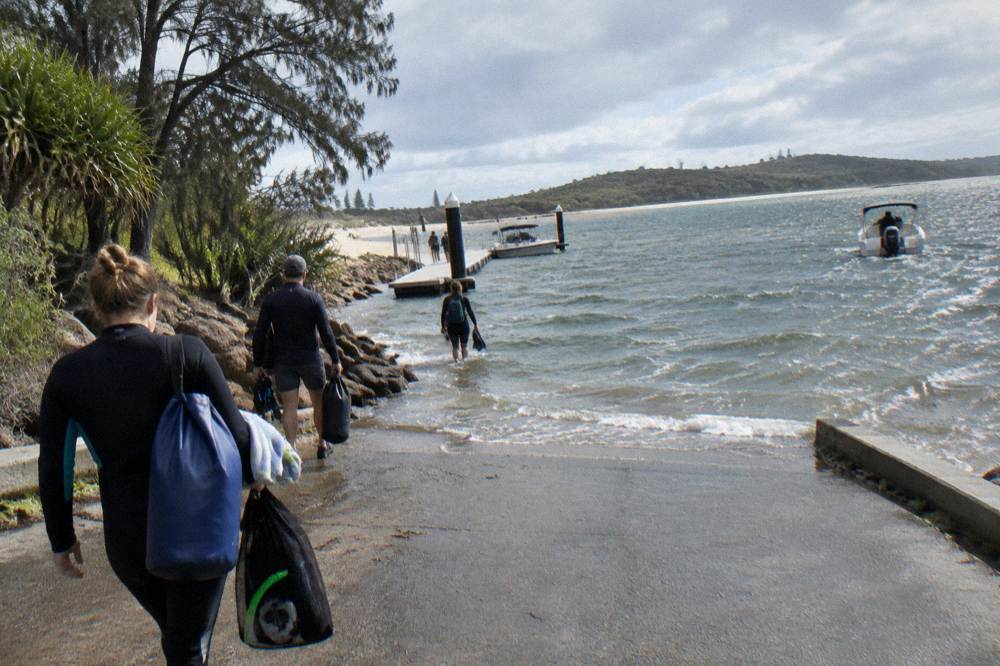
The suit question is the one with a hard answer per operator, covered in the table above. The supervision question is structural: Dive Spear and Sport caps its speedboat at 10 guests, while the catamaran cruises do not state a group size. A guided snorkelling tour is part of the Dive Spear and Sport inclusions, and the glass-bottom boat on both catamaran cruises gives any nervous snorkeller a dry way to see the reef on the same ticket. That last point is worth dwelling on for a stinger-worried reader: a glass-bottom boat tour is included on both the 1770 Reef Eco Tours cruise and the Bundaberg Lady Musgrave Experience cruise, so the water is optional on those days even after you have paid for the trip.
There is also a biosecurity habit Queensland Parks asks of cay visitors that doubles as good general practice: remove soil and seeds from gear before visiting. It has nothing to do with stingers, but it is the kind of small, official instruction that marks a well-run day on a national park island, where all plants are protected and the cay is part of a World Heritage Area. Lady Musgrave Island is a coral cay built entirely by corals, as Queensland Parks describes the Capricornia Cays, eight islands in the park, and the reef around it sits inside the Great Barrier Reef Marine Park.
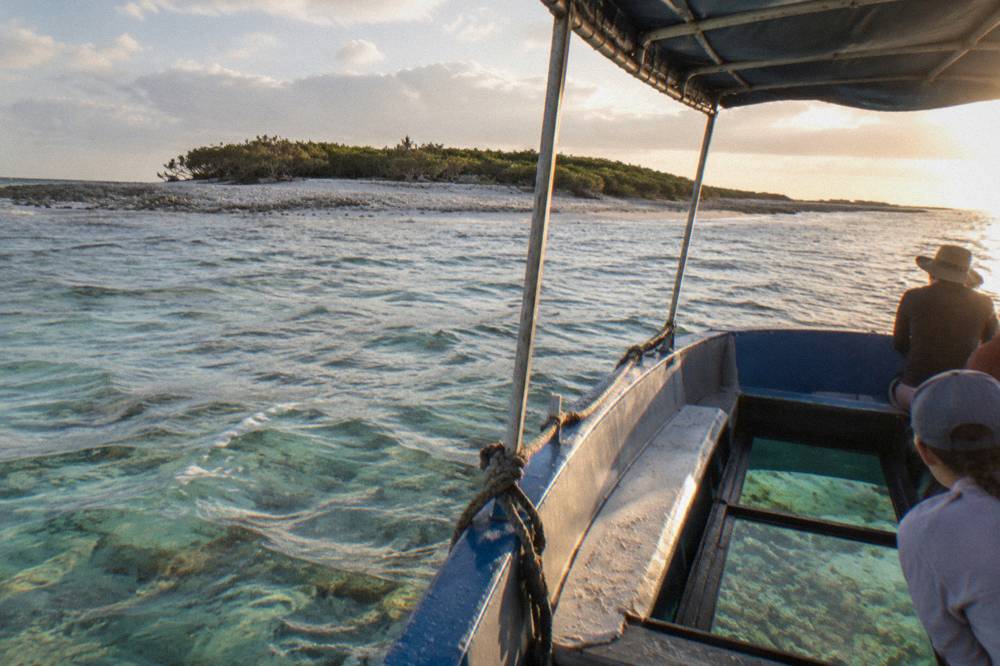
One more official line belongs in any honest risk discussion: sharks are present at all times of the year in open ocean, per Queensland Parks' Lady Musgrave page with its SharkSmart framing. This site's coverage of that question stands separate from the stinger question, and conflating the two produces worse advice than either alone. The stinger question has a regional answer and an operator-by-operator gear answer; the shark question has a direct official statement. Keeping them separate keeps both honest. Snorkellers who want that question handled on its own terms can read the breakdown of sharks on a Lady Musgrave Island snorkel cruise, which explains what Queensland Parks' statement means in practice.
What Else Should You Know Before Snorkelling At Lady Musgrave Island?
Beyond the suit and the season, three facts shape the day: the crossing, the island walk, and the reef charge. The 1770 Reef Eco Tours cruise states the transfer to the island takes about 90 minutes each way on the power catamaran, both catamaran cruises include a guided island walk and a glass-bottom boat tour, and the environmental management charge is A$8.50 per full-day passenger, collected by the operator. None of the three is a stinger fact, but all three come up in the same booking decision.
The crossing time belongs to the 1770 departure alone. The figure comes from 1770 Reef Eco Tours and covers its own departure only, so treat it as that operator's number rather than a general rule for the route. Both catamaran cruises list a guided island walk; conditions on the day are the operator's call. A reader who wants the full picture on that conditionality can read the guide to tides and landing on a Lady Musgrave cruise.
The environmental management charge is the official name, and the Reef Authority's charge page sets it at A$8.50 per passenger for a full day of three hours or more and A$4.25 for part day, collected by the permit holder, which is the operator, and remitted quarterly. Whether the charge sits inside a ticket price is a per-cruise fact, and nothing is stated about it either way, so the honest instruction is to ask when booking rather than assume. From 1 April 2027 the full-day figure rises to A$9.
Wildlife seasons round out the picture, with the same discipline about what is official and what is not. The Queensland Government states marine turtles nest on many south Queensland coast beaches on most nights from December to February, and the Capricorn and Bunker groups are one of the world's major breeding areas for green and loggerhead turtles, though Lady Musgrave is not among the islands it names for nesting. No tour on this site promises any wildlife sighting, and no honest page should. Whale season exists only as a Hervey Bay statement, June to November in that wider region, never tied to a 1770 or Lady Musgrave crossing.
Reef condition, when it comes up, is likewise regional. The Australian Institute of Marine Science's 2025-26 summary puts Southern Great Barrier Reef average hard coral cover at 26.4 percent across 121 reefs surveyed, relatively stable against 26.9 percent the year before and below a long-term average of 29.3 percent. That is a whole-of-southern-region figure, not a Lady Musgrave health report, and no operator claim should be built on it either direction.
The site that assembled this coverage, 1770 Cruises, holds the full set of cruise, LARC and dive trips for the Town of 1770, Agnes Water and Bundaberg departures, so a stinger question never has to be answered in isolation from the actual tickets.
Common Questions About Stingers On A Lady Musgrave Snorkelling Cruise
Are There Stingers On A Lady Musgrave Island Snorkelling Cruise?
No official source makes that call for Lady Musgrave Island. The Queensland Government states stingers are present in tropical Queensland waters year round with higher risk November to May, and its page does not address Agnes Water, the Town of 1770 or Lady Musgrave specifically. The practical answer is to follow the official advice, ask the operator what suit is provided or rentable, and decide with the season in mind.
When Is Stinger Season In Queensland?
The Queensland Government defines the marine stinger season as November to May, with higher risk during those months and year-round presence otherwise. The Bureau of Meteorology separately puts the official tropical cyclone season at 1 November to 30 April.
Do I Need A Wetsuit To Snorkel At Lady Musgrave Island?
No cruise states that a suit is compulsory. The 1770 Reef Eco Tours cruise lists wetsuits under exclusions, the Dive Spear and Sport southern Great Barrier Reef snorkelling trip includes a full length wetsuit, and the Lady Musgrave Experience cruise from Bundaberg lists wetsuits as available to rent. The official Queensland advice suggests considering a full-body lycra suit.
Can You Swim And Snorkel In A Green Zone?
The Reef Authority states anyone can enter the Marine National Park (Green) Zone to boat, swim, snorkel and sail, with fishing and collecting not allowed. The Green Zone is a zoning fact, not a safety rating, so the stinger and swim advice above still applies.
What Should I Do If I Am Worried About Stingers But Still Want To See The Reef?
Two of the cruises include a glass-bottom boat tour on the same ticket, the 1770 Reef Eco Tours cruise and the Bundaberg Lady Musgrave Experience cruise, giving a dry way to see the coral. Asking the operator about suit provision before booking, and weighting the November-to-May months in your planning, covers the rest of the official advice.
Are There Sharks At Lady Musgrave Island Too?
Queensland Parks states sharks are present at all times of the year in open ocean, paired with SharkSmart advice. That is the one direct official statement about marine life at this reef, and it is separate from the stinger question.