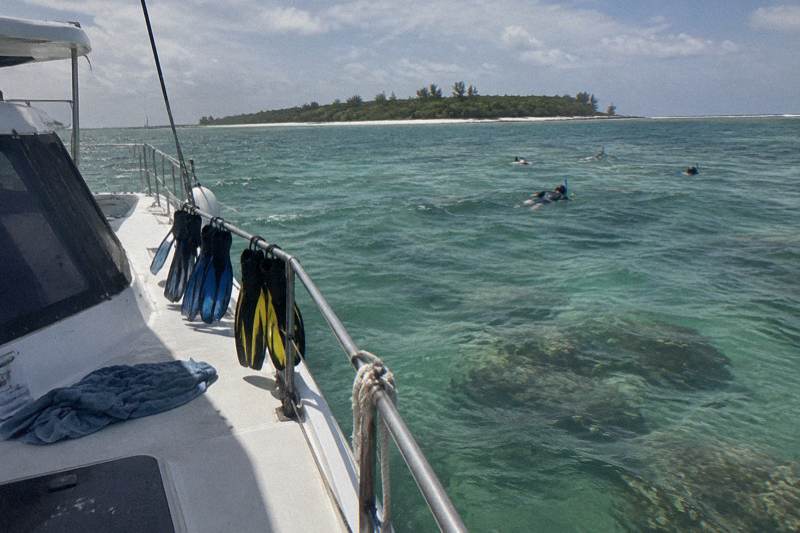
Can You Swim Or Snorkel On A Lady Musgrave Island Day Cruise?
Snorkelling is the main draw of every Lady Musgrave Island day cruise, but the details differ by operator: gear inclusions, wetsuit policies and how much water time you actually get.
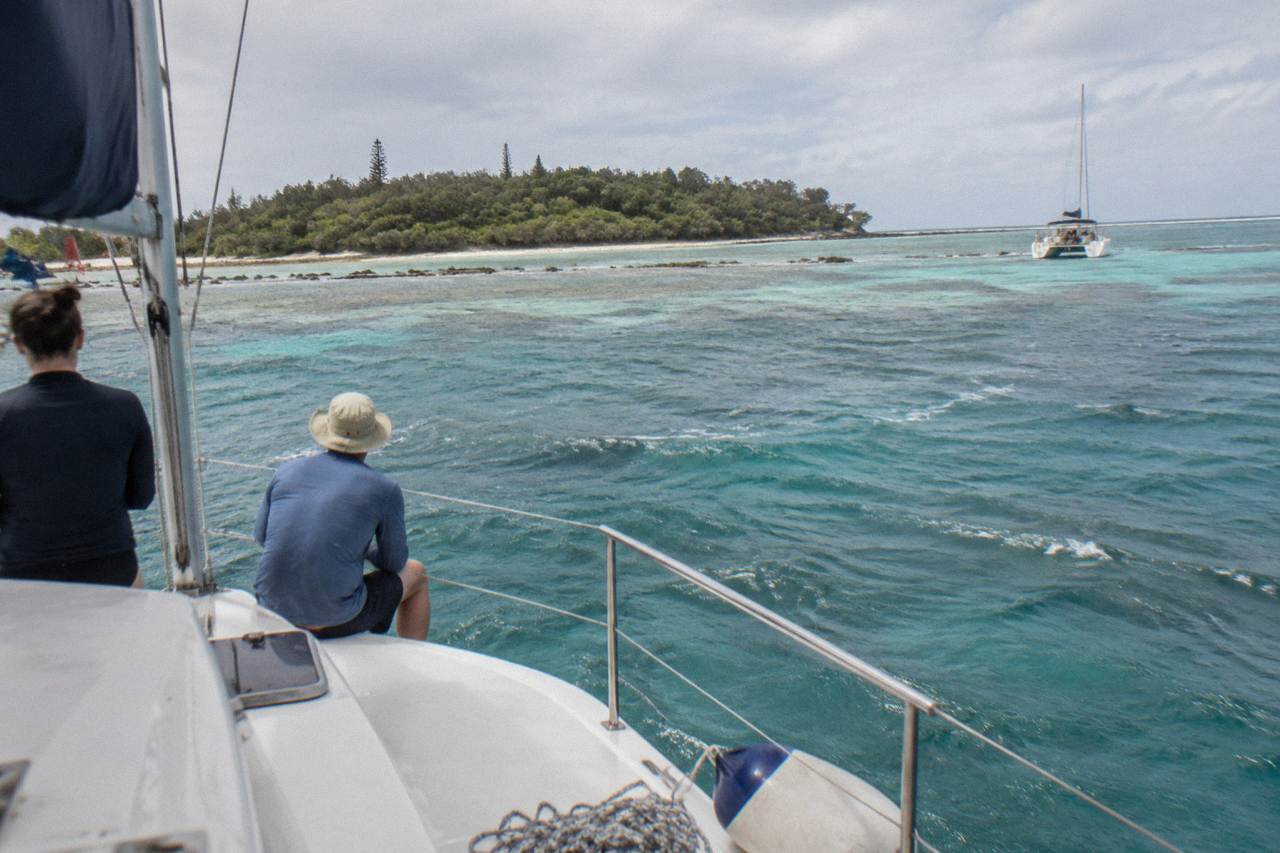
Yes, swimming and snorkelling are the core of every Lady Musgrave Island day cruise shown on this site: the two Lady Musgrave cruises and a southern reef snorkel trip all list snorkelling. Snorkel gear is named as included on the 1770 Reef Eco Tours cruise, the Dive Spear and Sport trip and the Lady Musgrave Experience cruise from Bundaberg, and the waters around the island sit inside the Great Barrier Reef Marine Park where anyone may swim and snorkel. Before you dip in, it helps to know what else lives in those reef waters, and the guide to sharks on a Lady Musgrave Island snorkel cruise explains what Queensland Parks says and what it means for snorkellers.
Lady Musgrave Island is a coral cay in the Capricornia Cays, part of Capricornia Cays National Park and the Great Barrier Reef World Heritage Area. Queensland Parks places the camping area 59 kilometres east-north-east of Seventeen Seventy, and Tourism and Events Queensland describes 1770 as the closest mainland departure point for day tours, with vessels leaving from the 1770 marina. There is also a daily commercial service to the island, weather-dependent, so check timetables with the operator. The full set of current trips is compared on 1770 Cruises, and the swimming question runs through all of them.
The question of whether you can get in the water is really three smaller questions: does your cruise provide gear, does it give you time at the reef, and are there conditions or rules that shape the swim. Each of the two island day cruises answers those slightly differently. The 1770 Reef Eco Tours Lady Musgrave Island snorkelling day cruise lists a glass-bottom boat tour, a guided island walk and snorkelling equipment, with lunch and teas included, from $222 per person over 9 hours. The Dive Spear and Sport snorkelling day trip from 1770 visits two different snorkelling sites with all equipment including a full-length wetsuit, from $216 over 9 hours in a group of up to 10. The Lady Musgrave Experience day cruise from Bundaberg, 10 hours from $237, includes premium mask, snorkel and fins, a guided island walk and a glass-bottom boat tour.
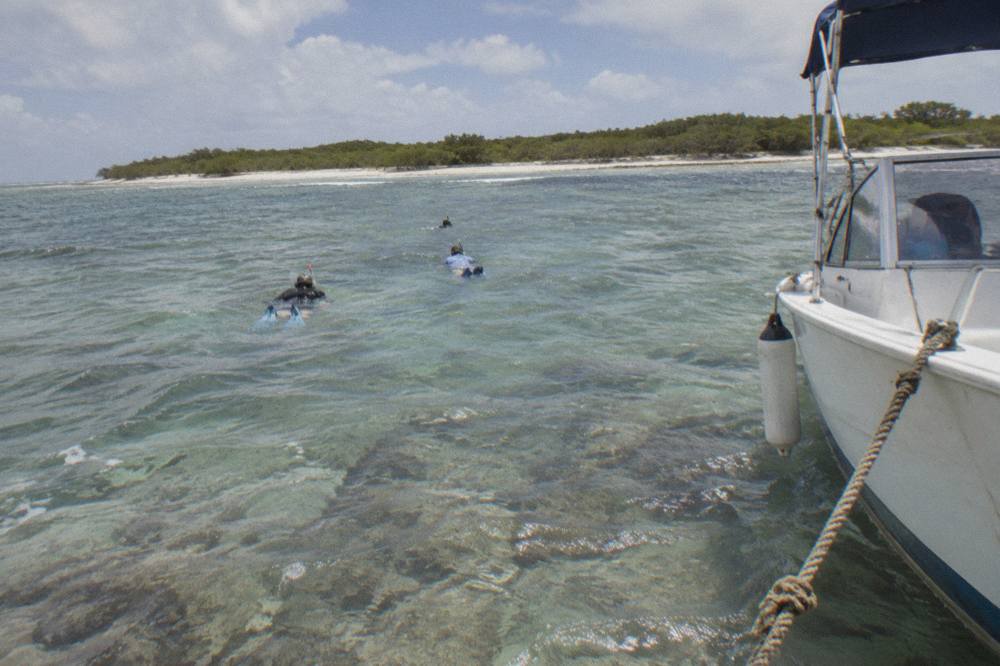
Before choosing, it helps to read the broader picture: the guide to Lady Musgrave Island tours from 1770 covers the departure points, and the post on whether a Lady Musgrave day cruise is worth it weighs the day against the price.
Which Day Cruises Actually Put You In The Water?
Both Lady Musgrave Island day cruises include snorkelling in their inclusions: the 1770 Reef Eco Tours cruise from the 1770 marina and the Lady Musgrave Experience catamaran from Bundaberg Port Marina at Burnett Heads. A third snorkel option, the Dive Spear and Sport speedboat trip from the 1770 marina, visits southern Great Barrier Reef sites rather than Lady Musgrave Island. The differences are the vessel, the group size and what surrounds the snorkel stop, from glass-bottom boat tours to guided island walks.
The 1770 Reef Eco Tours Lady Musgrave Island snorkelling day cruise is the archetypal version. It crosses to the island on a power catamaran, a trip the operator says takes about 90 minutes each way, and the day includes a glass-bottom boat tour, a guided island walk, snorkelling equipment and lunch with morning and afternoon tea. It is rated 4.3 across 257 reviews and runs 9 hours from $222 per person. Hotel pickup is stated as not included, so you make your own way to the 1770 marina in the Town of 1770.
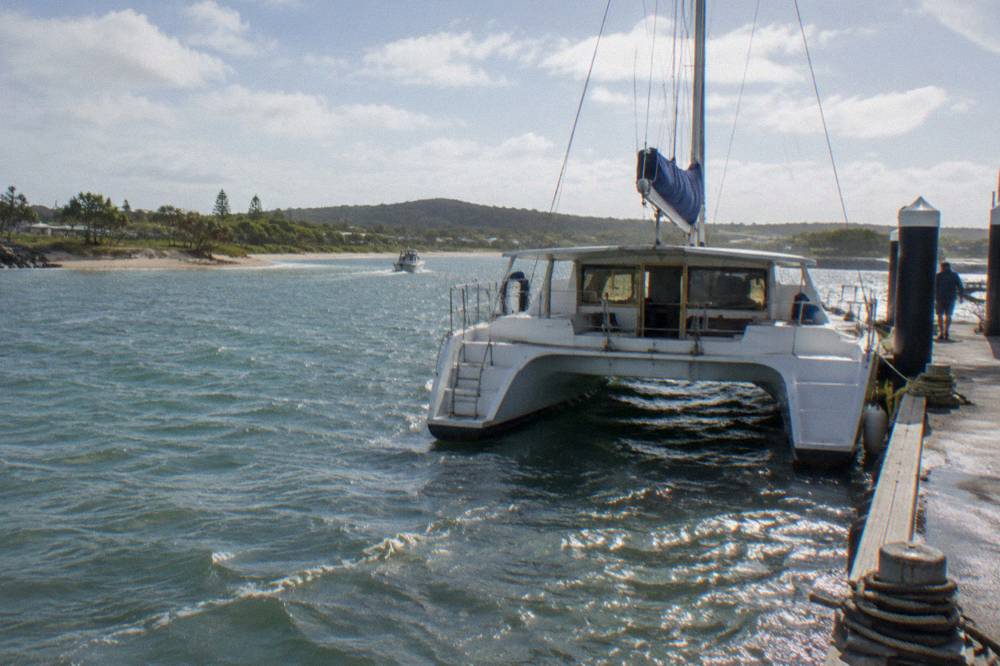
The Dive Spear and Sport snorkelling day trip from 1770 takes a different shape. It is a speedboat trip for a maximum of 10 guests, 9 hours from $216, visiting two different snorkelling sites with a guided snorkelling tour and a talk on marine conservation. Lunch and snacks are included, along with all snorkelling equipment including a full-length wetsuit, which no other island cruise includes outright. It carries a 4.7 rating across 40 reviews. Hotel pickup is again stated as not included.
From Bundaberg, the Lady Musgrave Experience day cruise departs Bundaberg Port Marina at Burnett Heads, not the 1770 marina, and runs 10 hours from $237. Inclusions cover premium mask, snorkel and fins, a guided island walk, a glass-bottom boat tour, a gourmet buffet lunch and warm freshwater showers on board. It is rated 4.8 across 368 reviews, with cancellation terms of 14 days rather than the 24 hours offered on the other two.
| Cruise | Departs | Duration | From (USD pp) | Rating | Snorkel gear | Group max |
|---|---|---|---|---|---|---|
| 1770 Reef Eco Tours Lady Musgrave snorkelling day cruise | 1770 marina | 9 hours | $222 | 4.3 from 257 reviews | included, wetsuits excluded | Not stated |
| Dive Spear and Sport snorkelling day trip from 1770 | 1770 marina | 9 hours | $216 | 4.7 from 40 reviews | included, full-length wetsuit included | 10 |
| Lady Musgrave Experience day cruise | Bundaberg Port Marina, Burnett Heads | 10 hours | $237 | 4.8 from 368 reviews | included, wetsuit available to rent | Not stated |
For a fuller comparison of the two departure towns, the post on Lady Musgrave cruises from 1770 or Bundaberg breaks down the trade-offs, and the guide to Lady Musgrave cruises from Bundaberg covers that port in detail.
If a smaller, faster boat with gear and wetsuit in the price appeals, check availability for the 9-hour trip.
Do You Need To Be A Strong Swimmer?
Check the booking page for any swimming ability requirement or minimum age before you book. A day cruise is built around water time either way, so you should be comfortable floating with gear. The glass-bottom boat options on the 1770 Reef Eco Tours and Lady Musgrave Experience cruises give non-swimmers a dry way to see the reef, and the guided island walk on both is a second activity out of the water.
Snorkelling from a boat at an island reef is generally calm-water floating rather than lane swimming. Fins do much of the work, a mask lets you breathe-drag along the surface, and the dive guides on the Dive Spear and Sport trip are in the water with the group. That trip's own framing is a guided snorkelling tour at two sites, in a group capped at 10, which keeps the ratio of guides to guests close. Still, treat confidence in deep water at the snorkel sites as a planning assumption rather than a guarantee, and check depth and conditions with the operator before you book.
For anyone in the party who would rather stay dry, the two big-boat cruises each list a glass-bottom boat tour among the inclusions, which means the reef is visible without a swimsuit. Both also list a guided island walk, and whether the boat can put guests ashore depends on conditions on the day. The Dive Spear and Sport trip does not list a glass-bottom boat or an island walk; its day is built around the two snorkel stops, the conservation talk and the boat time between them.
The practical middle path is to pick the cruise whose non-snorkel inclusions match your weakest swimmer. A nervous swimmer is better served by a catamaran day with a glass-bottom boat and an island walk as alternatives, while a confident swimmer who wants maximum time face-down on the reef may prefer the small-group speedboat format. Neither choice is wrong, and both departures run the full day, 9 hours from 1770 or 10 hours from Bundaberg.
Is Snorkelling Gear Included, Or Do You Rent It?
Snorkel gear is listed as included on all three full-day reef snorkelling trips, but wetsuits are handled three different ways: Dive Spear and Sport includes a full-length wetsuit on its southern reef trip, the Lady Musgrave Experience cruise lists wetsuits as available to rent, and the 1770 Reef Eco Tours cruise lists wetsuits under exclusions, meaning you bring your own or arrange one if you want it.
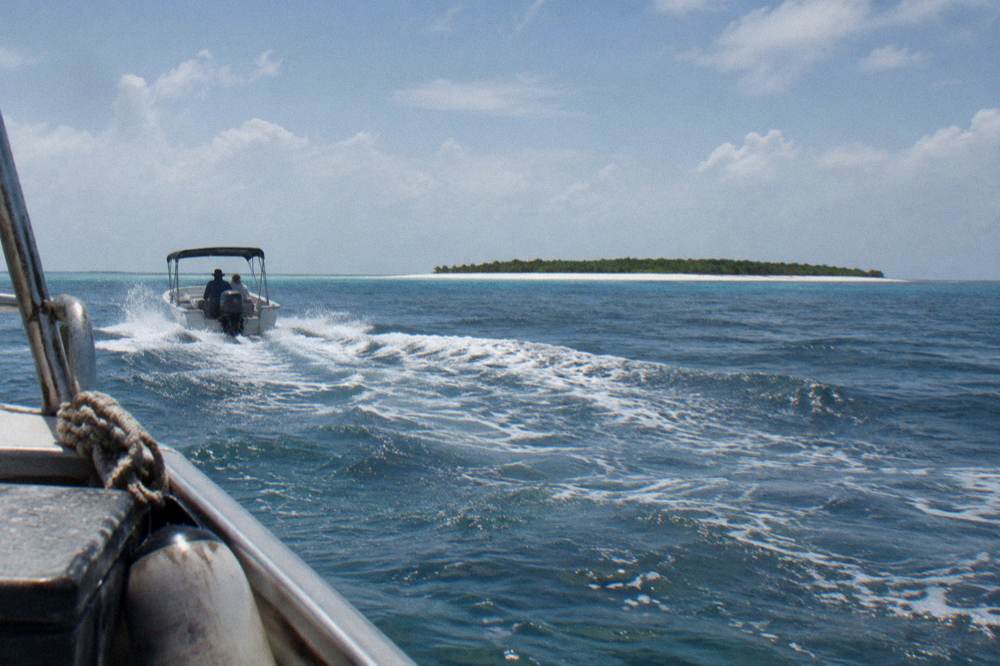
The detail matters more than it sounds. A full-length wetsuit does two jobs in southern Great Barrier Reef water: it adds warmth on a long day and it adds buoyancy and skin coverage. The Dive Spear and Sport trip bundles the suit with the mask, snorkel and fins at the $216 from-price, which is why its page is the only one of the three where a swimmer needs to bring nothing but a towel. The Lady Musgrave Experience cruise from Bundaberg includes premium Mares mask, snorkel and fins and offers wetsuits to rent, along with optional purchases like introductory dives for certified and non-certified divers and a premium upgrade, so the on-board spend can grow beyond the ticket. The 1770 Reef Eco Tours cruise includes snorkelling equipment and lists wetsuits as excluded, so a suit is your own arrangement.
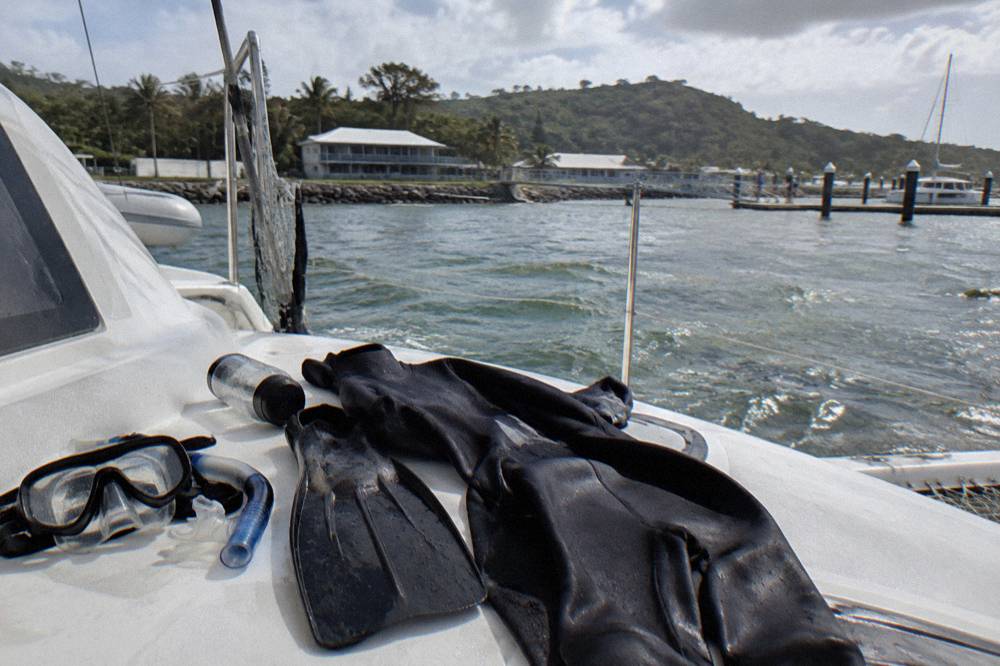
The Queensland Government's general marine stinger advice is worth reading alongside the wetsuit question: marine stingers are present in tropical Queensland waters all year round, risk is higher from November to May, and the advice includes considering a full-body lycra suit. That is a statewide statement rather than one about Lady Musgrave specifically, so check with the operator about stingers at the island. It does explain why the wetsuit column in a tour comparison is not cosmetic: on the trip where the suit is included, the coverage decision is already made for you.
One more packing note that belongs here rather than repeated later: reef-safe sun protection, a towel and dry clothes for the ride home. The guide on what to bring on a Lady Musgrave day cruise carries the full checklist, and the blog post on stingers and a Lady Musgrave snorkelling cruise deals with the suit question in depth.
Can You Swim Off The Island Itself?
A guided island walk is listed on the 1770 Reef Eco Tours and Lady Musgrave Experience cruises, but neither promises a beach landing: Queensland Parks says the commercial service to Lady Musgrave is weather-dependent, and access depends on conditions on the day.
The distinction between an island walk and a landing is not pedantry. Lady Musgrave is a national park cay with a pisonia forest, a designated cay access channel and a vessel loading area under the site management arrangements for the reef. The Reef Authority's rules for the location include a go-slow area extending to 500 metres around the island or the edge of the outer drying reef, whichever is less, public moorings where available, and a marked no-anchoring zone. Those arrangements exist to protect the cay and the coral, and they shape where boats can position and where guests can step off.
For swimmers the takeaway is simple: the reliable water time is the snorkel stop from the boat. The walk, when it runs, is a guided experience on the island itself, and the operators describe it as exactly that. The Dive Spear and Sport trip does not list an island walk at all, so its day is entirely boat and water, which suits visitors whose goal is purely to snorkel.
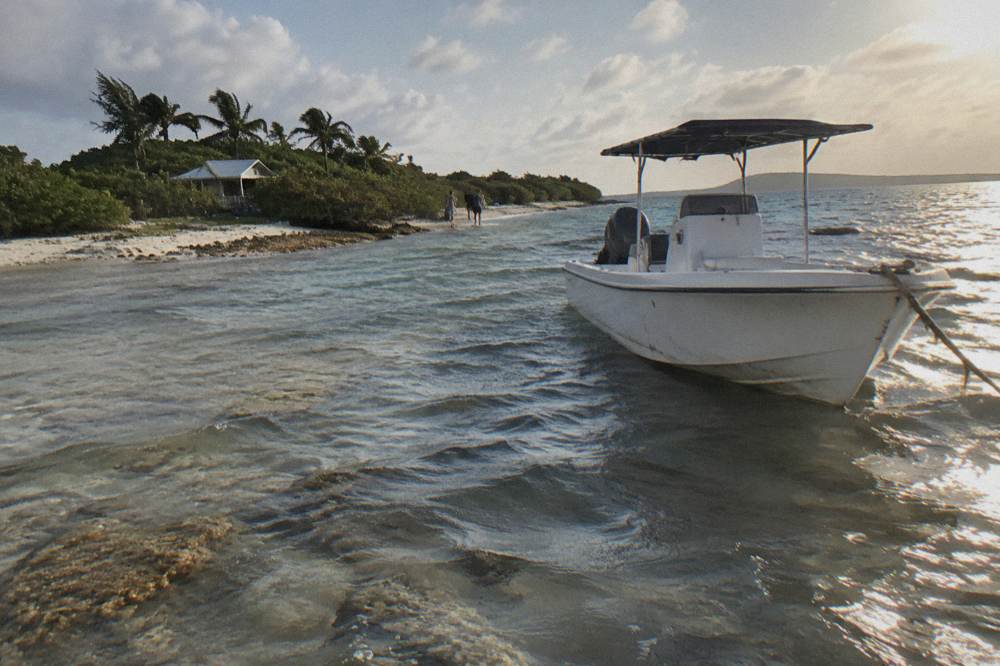
Camping is the other way to spend longer around the island, with permits from Queensland Parks required and fees applying, bookings up to 9 months ahead and seasonal camping closures in force. That is a different trip entirely, and the guide comparing a day cruise versus camping on Lady Musgrave covers it. For a day visitor, the swim happens where the boat stops.
What Rules Apply Where You Snorkel?
The waters around Lady Musgrave Island sit inside the Great Barrier Reef Marine Park, and the Reef Authority confirms anyone may enter a Marine National Park (Green) Zone to boat, swim, snorkel and sail, while fishing and collecting are not allowed without a permit: about 33 per cent of the Marine Park is Green Zone. For day cruisers that means reef-wide rules apply, look, swim and float freely, take nothing.
The environmental management charge is the official name for the per-passenger reef charge, A$8.50 for a full day and A$4.25 for a part day, and it is collected by the permit holder, the operator, and remitted quarterly. Whether it sits inside or on top of a ticket price is a per-booking question no operator answers, so check with the operator when you book.
The other rules that touch a swimmer are behavioural. Sharks are present at all times of the year in open ocean, as Queensland Parks states plainly, which is normal for a healthy reef and not a reason to stay on the boat. Biosecurity rules ask visitors to remove soil and seeds from gear before landing on the cay, and all plants in the national park are protected. None of this changes what a swim feels like, but it explains why crews are particular about where you step and what you touch.
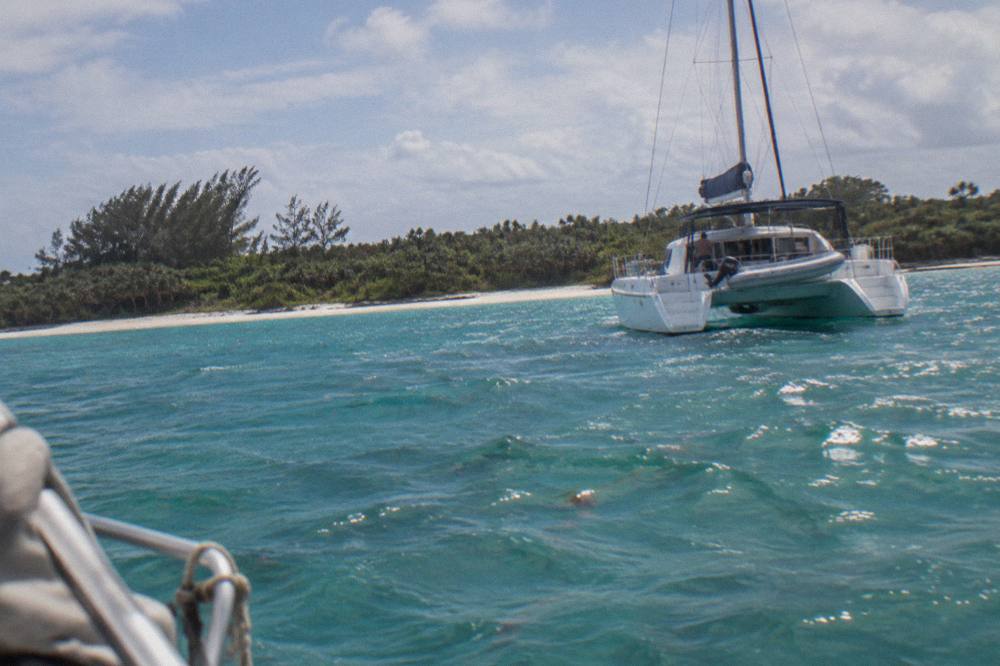
The catamaran day above includes snorkel gear in the price, a glass-bottom boat, a guided island walk and nine hours on the water from the 1770 marina. Between it and the small-boat trip, the swim itself is the same activity done at two different paces.
When Is The Best Time Of Year To Snorkel Here?
The best guide to timing is the climate record: the Bureau of Meteorology's Seventeen Seventy station records mean maximums from 21.5 degrees in July to 29.7 in January, and the driest months are June to September, the wettest December to March. November to May carries the state-wide higher marine stinger risk.
The rainfall pattern is the part swimmers notice most. Mean monthly rainfall bottoms out from June through September, between 34.9 and 58.1 millimetres a month, and peaks from December through March, between 129.2 and 172.6 millimetres. A day cruise is weather-dependent in any month, and the operators' own terms reflect that. The trade-off is the cooler end of the temperature range, which is exactly when a wetsuit, included on the Dive Spear and Sport trip or rentable on the Bundaberg cruise, earns its place.
The official tropical cyclone season in the Australian region runs from 1 November to 30 April, which overlaps the wetter half of the year and the higher-risk stinger months. Again, that is a region-wide statement from the Bureau, not a forecast for any particular week. Nesting turtles use south Queensland beaches from December to February, though none of the tours compared here promises a sighting, so a swim or snorkel day is best chosen for the reef itself rather than for a turtle.
If timing is the decision you are weighing, the guide to the best time for a Lady Musgrave Island cruise works through the seasons month by month, and the post on what happens if weather cancels a Lady Musgrave cruise explains the refund side. All eight tours shown on this site state free cancellation, 24 hours before departure on seven of them and up to 14 days on the Bundaberg cruise, so a weather call rarely costs the fare if you plan ahead.
How Much Swimming Time Do You Actually Get?
On a 9 or 10 hour day cruise, the water time is bracketed by sailing, lunch and the island walk or second snorkel site: the Dive Spear and Sport trip splits its day across two different snorkelling sites, while the two big-boat cruises combine one main snorkel stop with a glass-bottom boat tour and a guided walk. No operator states a fixed number of swimming minutes, so plan by structure rather than by stopwatch.
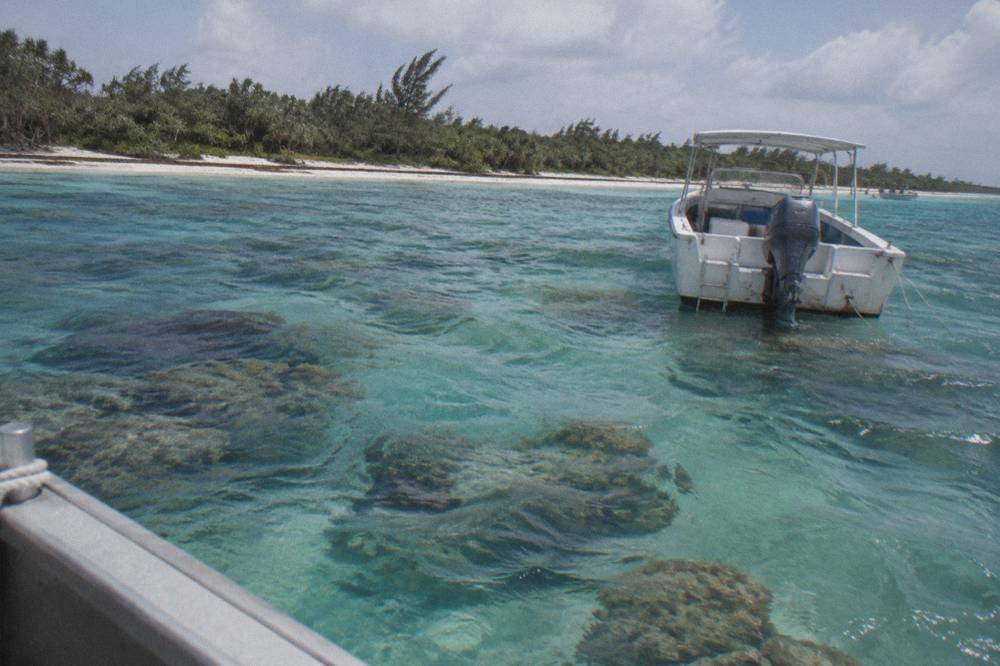
The arithmetic of the day helps. The 1770 Reef Eco Tours crossing is about 90 minutes each way by the operator's own account, roughly three hours of the 9-hour day spent getting there and back. What fills the middle is the difference between operators. A catamaran day layers the snorkel stop with the glass-bottom boat and the island walk, so each activity claims a slice of the lagoon hours. The speedboat day concentrates on two snorkel sites with a conservation talk between them, which is why it suits visitors who measure the trip in mask-on minutes.
Lunch is included on both Lady Musgrave cruises, the 1770 marina departure and the Bundaberg departure, which protects the middle of the day from shore logistics. The LARC amphibious tours from 1770, which are a different product entirely, also include lunch on their full-day and two-hour formats, but they do not list snorkelling: their water story is creek crossings, dunes and a swim at Middle Island on the Paradise Tour, not a reef. The 7-hour Paradise Tour with Bustard Head and sandboarding is priced from $118 and rated 5.0 across 615 reviews, the most reviewed product on this site, but a reader asking about snorkelling should treat it as a land-and-beach day rather than a reef swim.
Common Questions About Snorkelling On A Lady Musgrave Cruise
Can You Swim Or Snorkel On A Lady Musgrave Island Day Cruise?
Yes. Snorkelling is included on both island day cruises, the 1770 Reef Eco Tours cruise from the 1770 marina and the Lady Musgrave Experience cruise from Bundaberg Port Marina at Burnett Heads, and on the Dive Spear and Sport day trip from the 1770 marina, which heads to southern Great Barrier Reef sites rather than the island. Snorkel gear is listed as included on each, and the waters sit in the Great Barrier Reef Marine Park where anyone may swim and snorkel.
Is A Wetsuit Included On A Lady Musgrave Snorkelling Cruise?
It depends on the operator. Dive Spear and Sport includes a full-length wetsuit with its snorkelling equipment, the Lady Musgrave Experience cruise from Bundaberg lists wetsuits as available to rent, and the 1770 Reef Eco Tours cruise lists wetsuits under exclusions, so you would bring or arrange your own.
Do You Need To Be A Confident Swimmer?
The Dive Spear and Sport page asks that participants be comfortable in water; no operator states a minimum age. The two big-boat cruises each include a glass-bottom boat tour and a guided island walk, which give alternatives to guests who would rather not snorkel, while the Dive Spear and Sport trip is built around guided snorkelling at two sites in a group of up to 10.
Can You Go Ashore On Lady Musgrave Island?
The 1770 Reef Eco Tours and Lady Musgrave Experience cruises list a guided island walk, but neither promises a landing. Queensland Parks states the commercial service to the island is weather-dependent, so going ashore depends on conditions on the day.
Are There Stingers At Lady Musgrave Island?
For current stinger advice at Lady Musgrave Island, check with the operator before you swim or snorkel. The Queensland Government advises that marine stingers are present in tropical Queensland waters year round with higher risk from November to May, and suggests considering a full-body lycra suit. Follow the operator's guidance on the day.
What Happens If The Weather Cancels The Swim?
All eight tours shown on this page state free cancellation: up to 24 hours before departure on seven of them, and up to 14 days on the Lady Musgrave Experience cruise from Bundaberg. Check the operator's terms for weather-related changes on the day itself.